Posted onFebruary 12, 2026|Comments Off on The Times: Shared meals and open gates: inside the UK’s co-housing revolution
In Cambridge, there’s a big waiting list for its first communal development. Could it solve the housing crisis or is it just a middle-class utopia?
On a crisp morning Helen Mulligan, 45, is giving me a tour of Marmalade Lane, the 42-home co-housing scheme in Cambridge where she and her husband bought a home last year with their two young children. She steps through her patio into the central pedestrianised lane — there’s no garden gate — as her three-year-old daughter, Gwennol, zooms past on her bike over a giant chalk pattern she and her friends have drawn on the tarmac.
Gwennol disappears towards the communal building where residents gather once a week to share a meal. “You see these maps about how close the average eight-year-old stays to home and shudder,” Mulligan says. “Here they can roam with children of different ages and learn what to do when something goes wrong.”
The houses sit around shared spaces rather than cul-de-sacs. There are few fences, cars are kept to the edges, and neighbours share communal space and — seemingly — gardens, toys and tools. “We’ve moved to this community with intention of being part of it. We have met so many friends,” Mulligan says.
Posted onDecember 12, 2025|Comments Off on Santa Cruz Local: Co-housing group seeks residents for 14-acre development near DeLaveaga park
SANTA CRUZ >> A new co-housing development is in the works for a 13.6-acre plot just north of the City of Santa Cruz — and organizers are looking for locals to join as future residents.
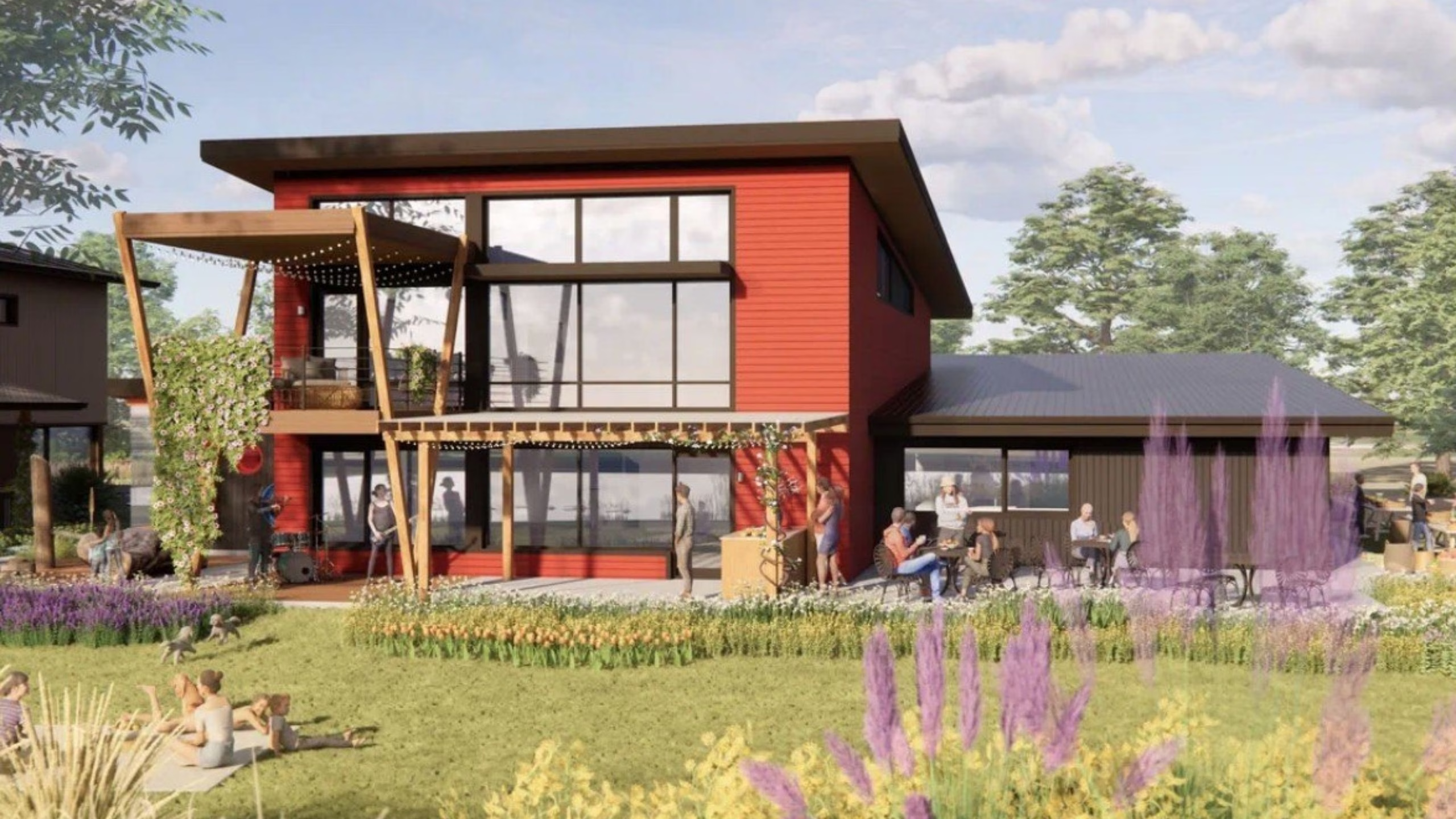
The proposed project at the end of Monte Street next to Carbonera Creek is in unincorporated Santa Cruz County, just north of the City of Santa Cruz. The initial vision includes a community house for meals and gatherings, and two-thirds of the property as open space accessible to neighbors. But most details, including the size or design of the buildings, will be determined as future residents join the group and help shape the plans.
“The whole point of co-housing is to be collaborative, and so we are together going to determine what the look of it is,” said Wesley Cheng, who plans to be a future resident.
Posted onDecember 7, 2025|Comments Off on The Bridge: Redefining Community: Inside Four Cohousing Projects in Central Vermont
Intentional communities have deep roots in Vermont, where people have long experimented with new ways of living together. While most of the back-to-the-land communes of the 1970s have disappeared, their ideals — connection, cooperation, conservation — still resonate. They have evolved into today’s cohousing communities — a structure where members own their homes but co-own the land, share infrastructure, and live collaboratively to varying extents.
Most of these communities are planned unit developments (PUDs) under Vermont law. A PUD is a zoning designation that permits — and often requires — clustering of homes on shared land to protect open spaces and woodlands. In some cases this clustering makes a project eligible for an extra unit beyond what standard zoning allows.
Posted onOctober 30, 2025|Comments Off on KUOW: 9 families, 1 roof: Urban cohousing in Seattle
Seattle’s housing scene is defined by high prices and shrinking apartments, leaving many people feeling both financially squeezed and socially disconnected.
Cohousing offers an alternative.
It’s rooted in sharing and intentional community. Residents build spaces together, with private units clustered around common areas. Daily life is designed for connection.
A multi-generational cohousing neighborhood, the sustainable community is southwestern Pennsylvania’s first ecovillage. Scheduled to be completed in the first half of 2026, the village — named after famed environmentalist Rachel Carson — consists of 35 private units ranging from studios to four-bedroom homes.
According to its developers, the entire community is designed to the highest standards of energy conservation, durability and air quality — creating an 80% savings in energy usage.
Posted onOctober 9, 2025|Comments Off on Spokane Public Radio: ‘The fruits of our labor’: How cohousing in Spokane is growing neighbors, fighting loneliness, and saving money
Certain crises are decades in the making. Housing is one of them. An epidemic of loneliness is another.
While the single family home remains a fixture of the American dream, some people are challenging that picture.
Cohousing is a style of neighborhood where residents have their own private homes but share common spaces and buildings.
Advocates of cohousing say their vision could help fight loneliness while building more housing on less land—which could be good news for the climate, too.
Posted onSeptember 16, 2025|Comments Off on Group Life: How to include kids without centering them
Because including kids shouldn’t mean losing everyone else.
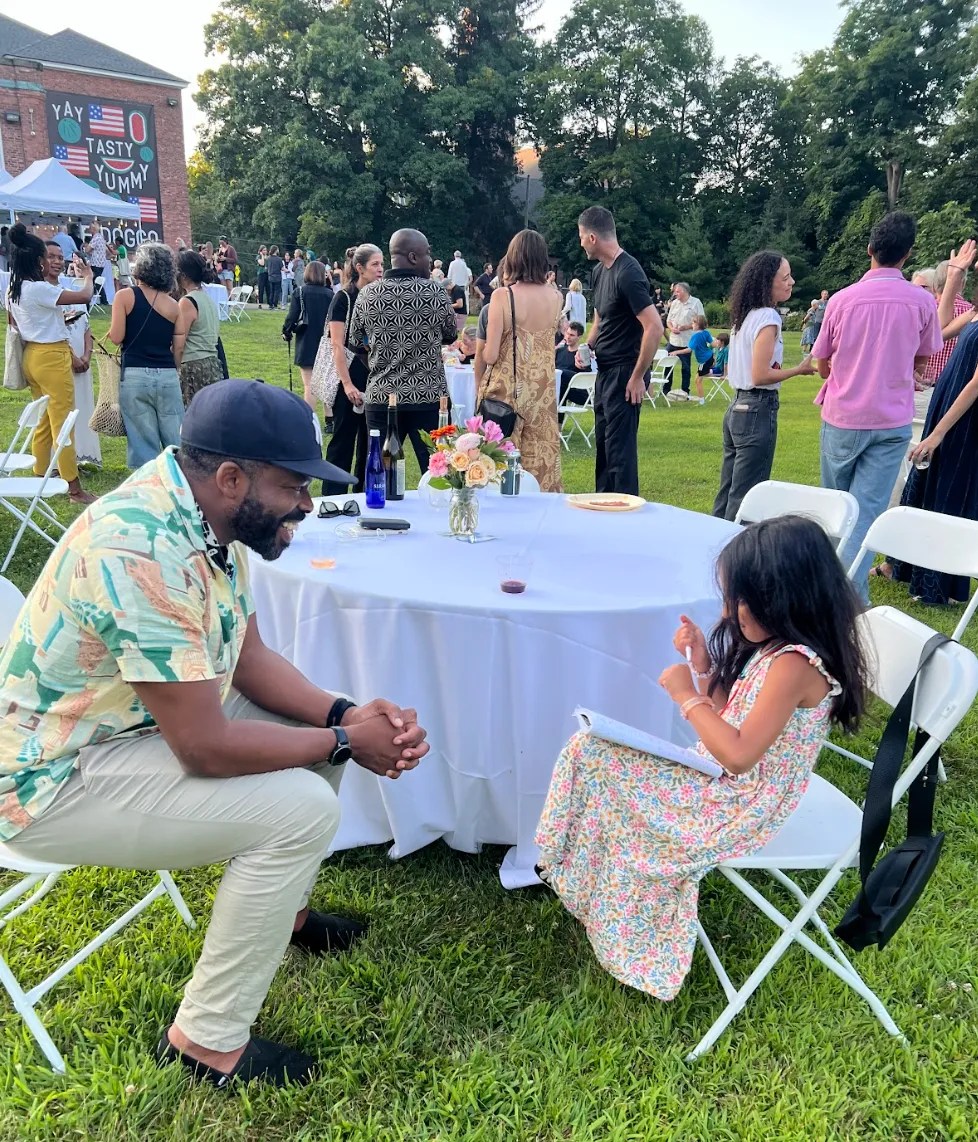
Last summer, a friend invited my husband, our two kids, and our nephew — ages 6, 8, and 9 at the time — to the opening of Upstate Art Weekend, a sprawling outdoor art festival. The air was buzzing: artists welcoming strangers into their studios, dancers warming up under trees, friends reuniting in pop‑up galleries. It was the kind of setting that usually screams “no kids”: unspoken adult rules, fragile pieces on pedestals, long conversations. And yet, there we were with three kids in tow.
We’ve been told that Americans don’t party anymore. And in the rare cases we do, it’s often siloed into micro-generations: parents with parents, singles with singles, kids with kids. Intergenerational gatherings feel increasingly rare and with good reason: parenting is more intensive, childcare networks are thinner and privatized, families live farther apart, and, post-COVID, home can feel safer than venturing out. Then comes the practical side: Will the kids eat what’s served? Will they vanish into screens? Will they be a royal pain in the butt? 😬
I’ve noticed that when the kids are present at our gatherings, we tend to oscillate between two extremes — designing the event entirely around them or ignoring them altogether.
We’ve been holding a question live in our own family: Can you meaningfully involve kids without centering them at an intergenerational gathering?
Posted onSeptember 15, 2025|Comments Off on The Observer: Happier families: new ways of living
Danish communal housing is building a better society. What can it teach us?
A ping-pong ball strikes me plumb on the forehead. No one else seems to notice, so I continue eating my fiskefrikadeller (fish cake) while the residents of Grønne Eng explain the benefits of communal living. “You can always find someone to look after your kids,” says Lene Skytte Hvid, mother of Niels, seven, and Bjørn, four, who are currently mucking around at the table-tennis table nearby and are my prime suspects for the ping-pong ball. “One of the main attractions for me was that my son would grow up with other kids his age to play with,” adds Anne-Sofie Helms, a digital journalist, and mother of six-year-old Louie.
A bearded older gentleman sitting opposite me at our long table introduces himself. Niels Kryger, 77, is a retired educational anthropologist. “The noise level can be a challenge,” he shouts, as I pass him the fish cakes. “But it’s young life, so…” He tells me Grønne Eng has far exceeded his expectations. “A good atmosphere. Good people.”
From the University of Wisconsin campus or from downtown Madison, travel south on Park Street. Turn right on Erin Street and proceed 2.5 blocks. Arboretum Cohousing is the green and brick building on the left side of the street.